OEM & Private Label Branding: How to Build a Brand Around Someone Else's Formula
Ditch the generic factory aesthetic. Learn how to transform off-the-shelf formulas into premium beauty brands through strategic positioning and identity design.
July 18, 2026
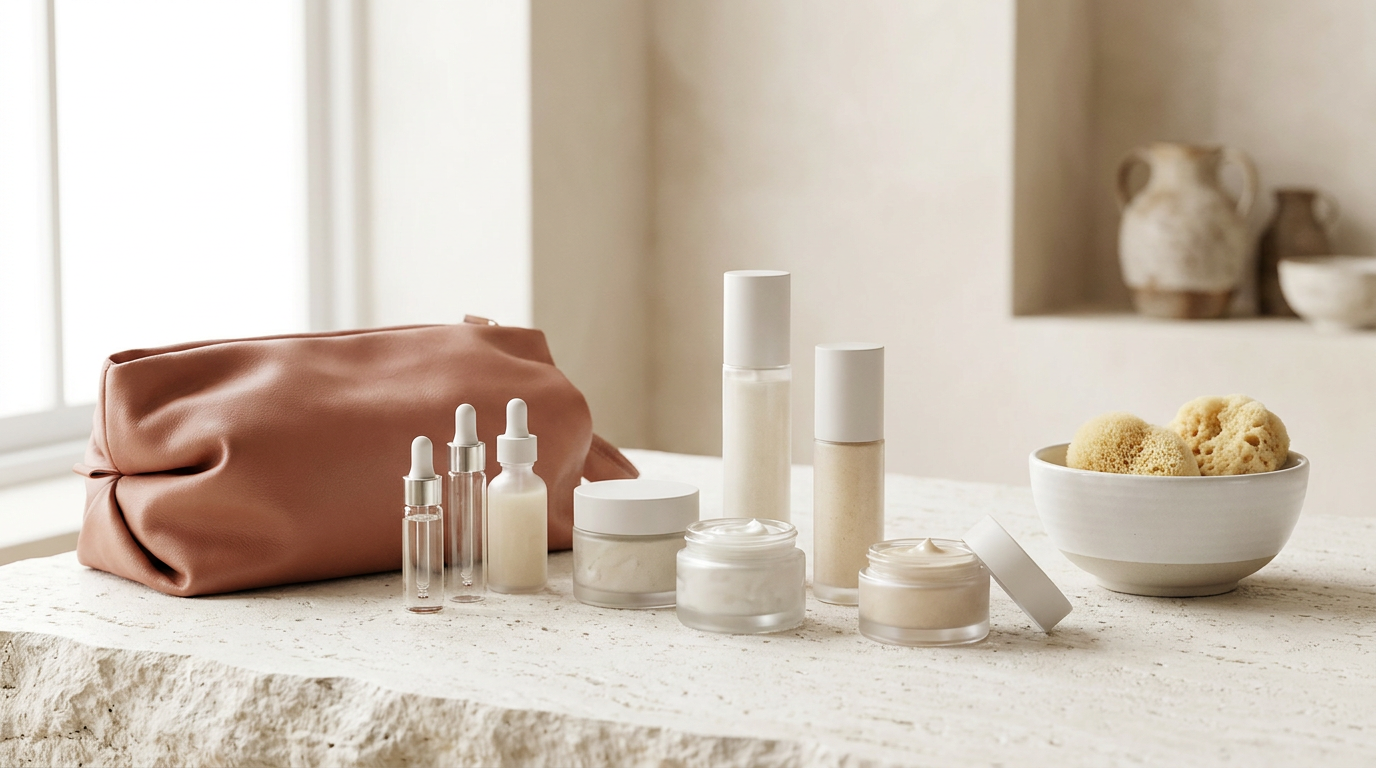
OEM & Private Label Branding: How to Build a Brand Around Someone Else's Formula
I recently sat in a boardroom with a founder who spent $40,000 on a custom Niacinamide serum formula before even naming his company. He had a 12% active ingredient story and a 500-unit minimum order quantity, but zero reasons for a customer to care. He fell into the classic trap of thinking the liquid inside the bottle is the business. It isn't. In the beauty space, the liquid is the commodity; the brand is the margin. If you are starting with a factory formula, you are already behind the curve unless you understand that your primary job is no longer formulation, it is world-building.
The OEM Branding Trap: Formula First, Brand Forgotten
Walk through any trade show in Guangzhou or Bologna and you will see the same three textures: a bouncy water-gel, a thick buttery cream, and a milky essence. These are high-quality, stable, and incredibly boring. Most founders pick a formula, slap a minimalist label on a stock glass bottle, and call it a day. That is not brand building. That is arbitrage. When you lead with the formula, you compete on price. If your only claim is "it has 5% Vitamin C," a competitor can launch the same factory formula tomorrow for two dollars less. You have no moat because you don't own the intellectual property of the juice. To survive, you must own the intellectual property of the emotion.
Why Your Brand Matters More Than Your Formula
Look at Rhode. Hailey Bieber didn't invent a new molecule. She took a standard pedagogical approach to skin barrier repair—peptides, glycerin, squalane—and wrapped it in a specific aesthetic universe. The formula is solid, but the brand identity is what sells out every drop. Consumers aren't buying a peptide glaze; they are buying into Hailey’s visual language of effortless cool. This is the power of private label branding. When the formula is a constant across the industry, the soul of the brand becomes the only variable that matters. It dictates whether you sell a cleanser for $12 at a local pharmacy or $48 at a high-end boutique.
Step-by-Step: Building a Brand for OEM/Private Label Products
Start by defining your category framing. Do not just say you are a skincare brand. Are you "Clinical Minimalism" or "Modern Herbalism"? One of our clients, a Bangkok-based startup, used a standard white label brightening cream. Instead of marketing it as whitening, we framed the brand around "Post-Tropical Recovery." We targeted travelers coming back from the islands with sun damage. The formula stayed the same, but the category shift made them the only solution for that specific problem. Use the Bagelsea brand tool to map out your competitor landscape. If everyone in your niche is using clinical white and blue, your OEM product needs to go warm, earth-toned, or neon. You have to find the gap in the visual noise before you even look at a component catalog.
Brand Identity That Justifies 5x the Price
Premium pricing in white label skincare relies on Brand Codes. These are the non-negotiable visual and sensory triggers that tell a customer your product is worth the extra spend. Think of Aesop. The brown apothecary bottle is a code. The specific font is a code. Even the way their store smells is a brand asset. For an OEM brand, your secondary packaging is your best friend. Since you likely can't afford custom-molded glass at the start, your box design, the weight of the paper, and the copy on the back must do the heavy lifting. We call this the "Perceived Value Offset." If the bottle is stock, the unboxing experience must feel bespoke.
How to Brief Your Factory with a Brand Book
Most founders send their factory a link to a competitor’s Instagram and say, "Make it look like this." That is a recipe for a generic failure. You need a Brand Book that outlines your verbal and visual identity before you talk to an OEM partner. Tell them the mood, the target price point, and the specific "hero" benefit you want to highlight. If your Brand House is built on the concept of "Urban Defense," your factory shouldn't be suggesting floral scents; they should be looking for pollution-blocking claims and crisp, ozone-like fragrances. A strong brief stops the factory from leading you down the path of least resistance—which is usually their most generic stock options.
Case Study: From White Label to Premium Brand
A small Australian brand we consulted with was struggling to sell a private label body oil. It was a standard jojoba and almond blend. They were priced at $22, competing with supermarket shelf dwellers. We repositioned them from "Body Care" to "Sensory Rituals." We changed the name to something more evocative, moved to a taller, weighted bottle, and focused the messaging on evening wind-down routines. By changing the brand identity and nothing else, they relaunched at $55 and saw a 300% increase in sales within six months. The customers weren't paying for the oil; they were paying for the permission to relax.
FAQ
Can I really build a high-end brand using OEM? Absolutely. Many of the most popular brands on Sephora shelves today started with stock formulations that were slightly tweaked.
How do I differentiate if another brand uses the same factory? You differentiate through your Brand Pyramid—your unique mission, tone of voice, and visual assets. Two brands can sell the exact same moisturizer, but one feels like a medical prescription and the other feels like a vacation.
Is white label branding cheaper? Initially, yes. It saves on R&D costs, allowing you to move that budget into brand strategy and high-quality creative assets, which is where the real battle is won.
Stop obsessing over the percentage of hyaluronic acid in your sample. Start obsessing over what that bottle says about the person holding it. Go download a brand strategy framework today and define your mission before you sign that factory contract.